
Marquise Diamond Engagement Rings






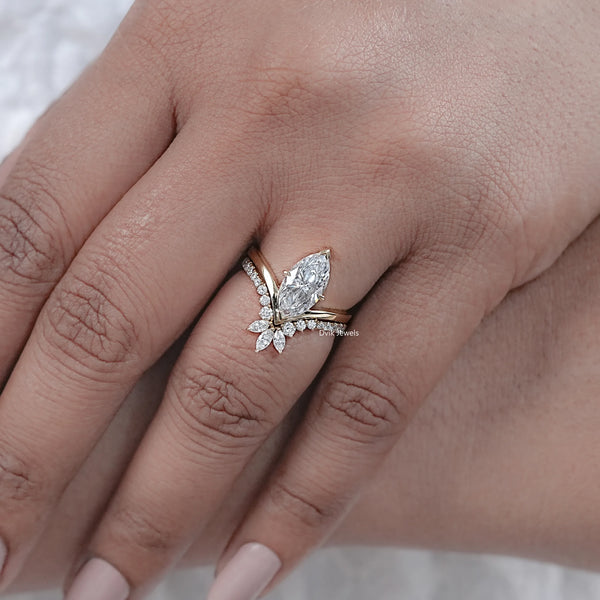
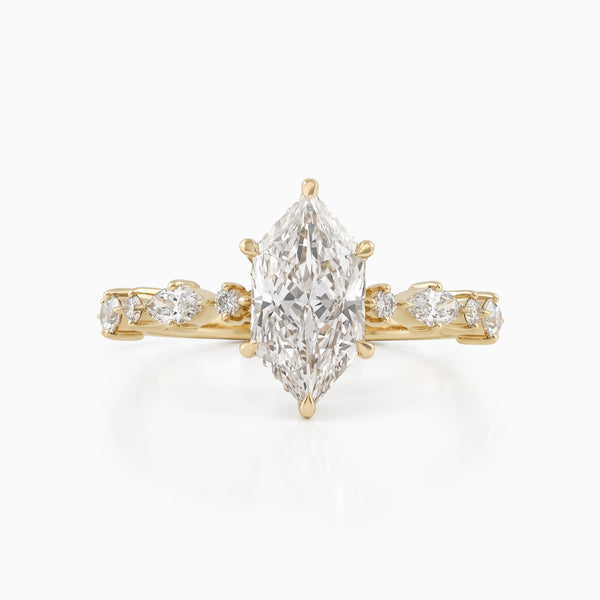
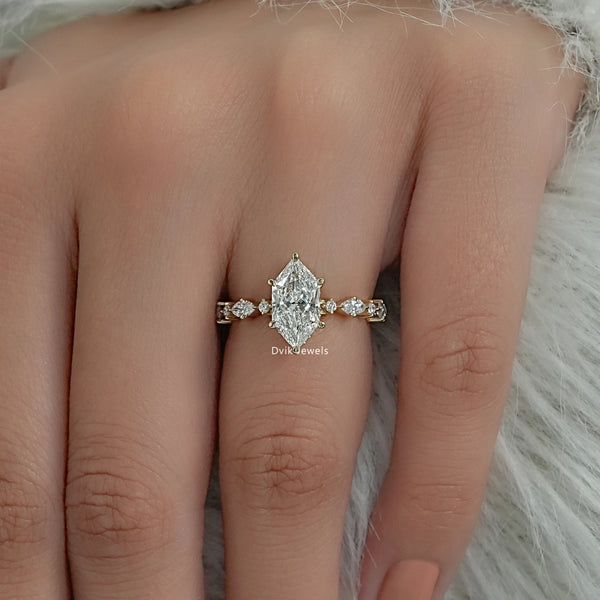
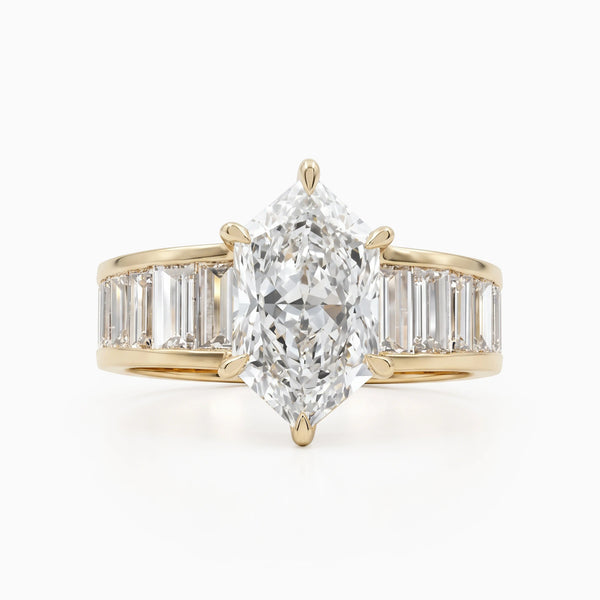


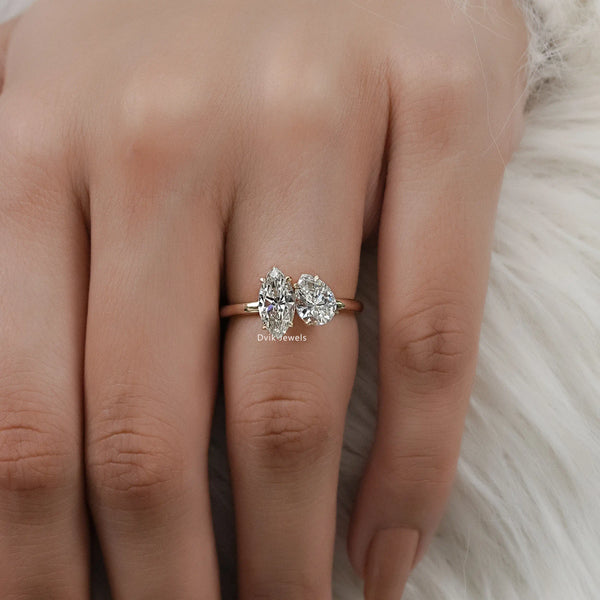
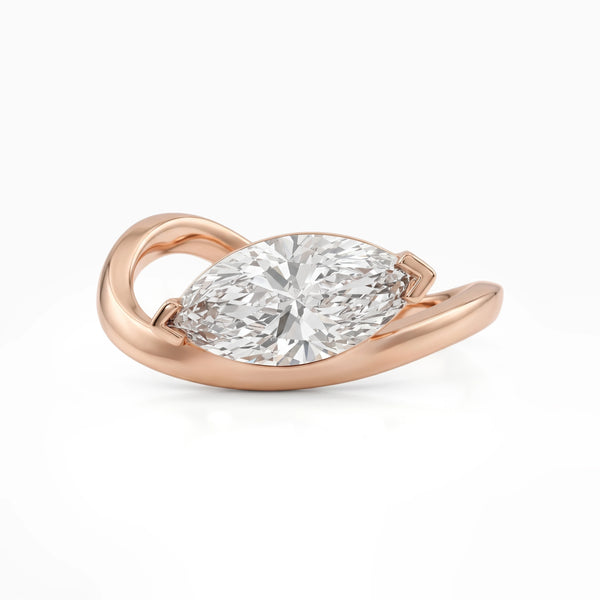

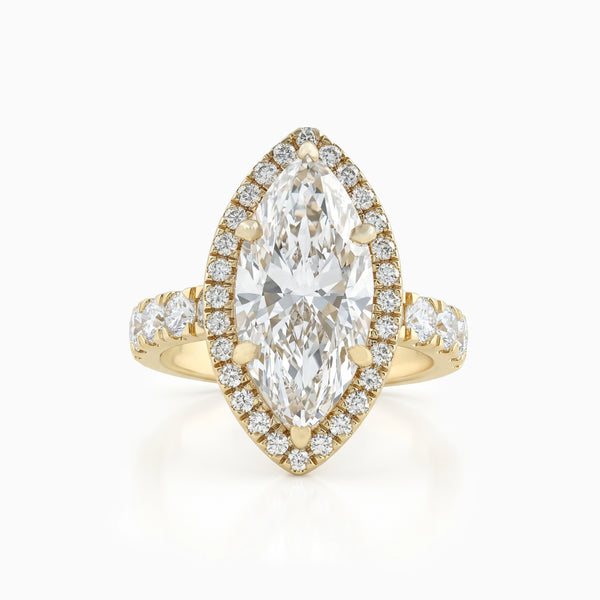

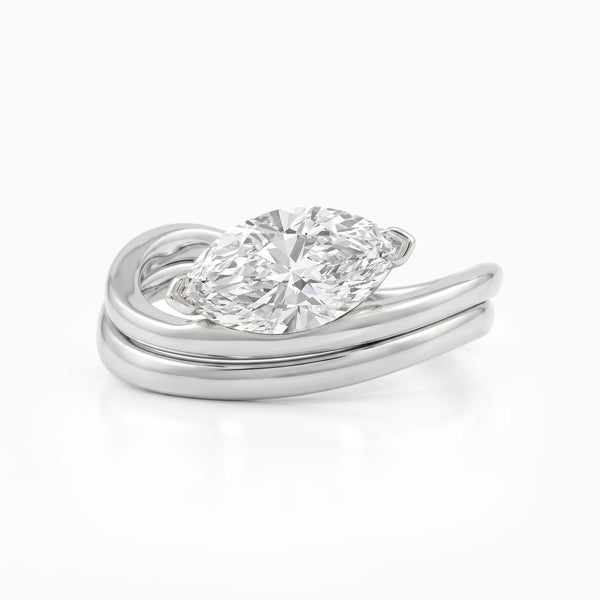




Explore Marquise Diamond Engagement Rings at DVIK Jewels
Collection FAQs
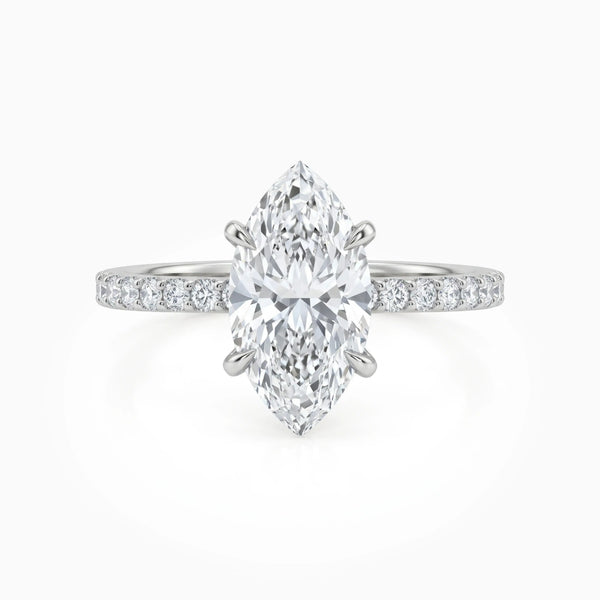
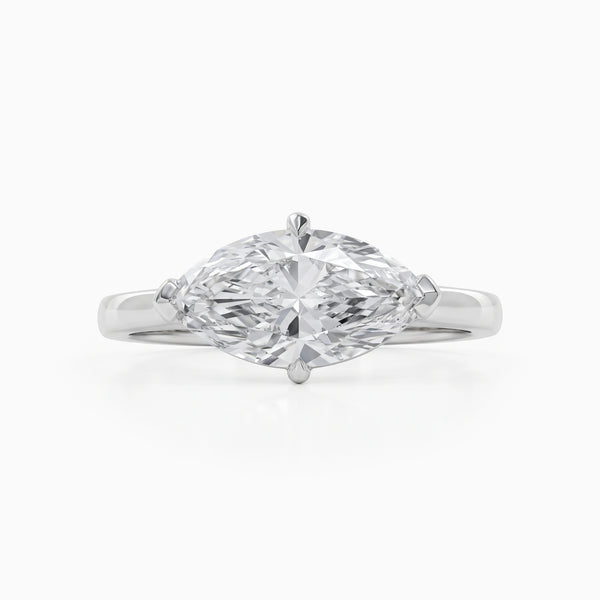
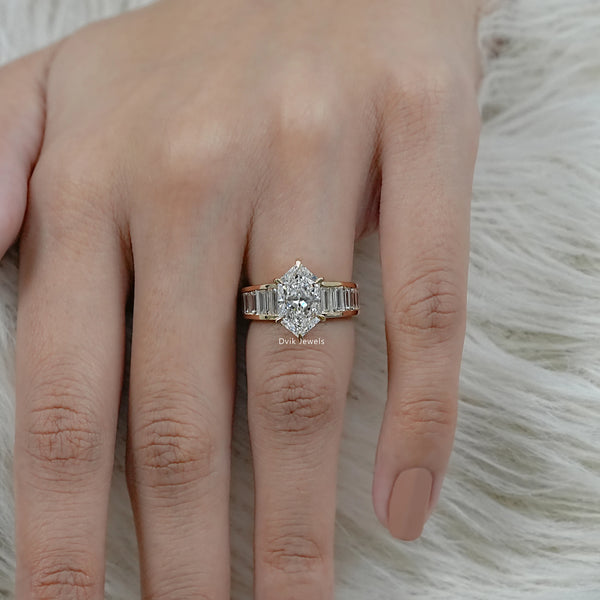
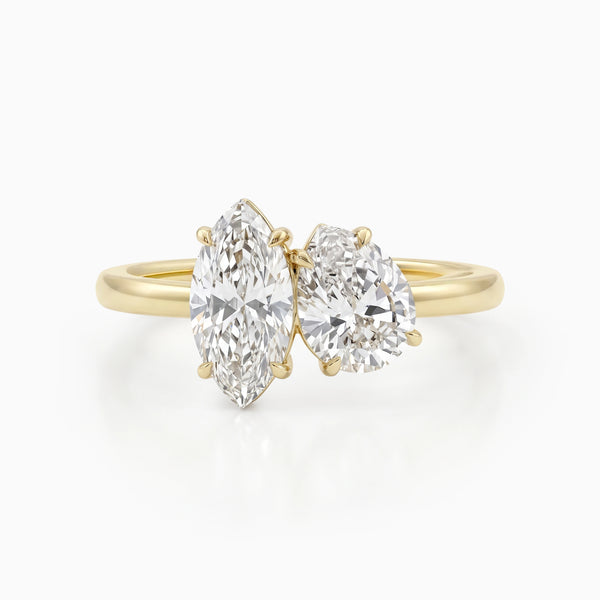
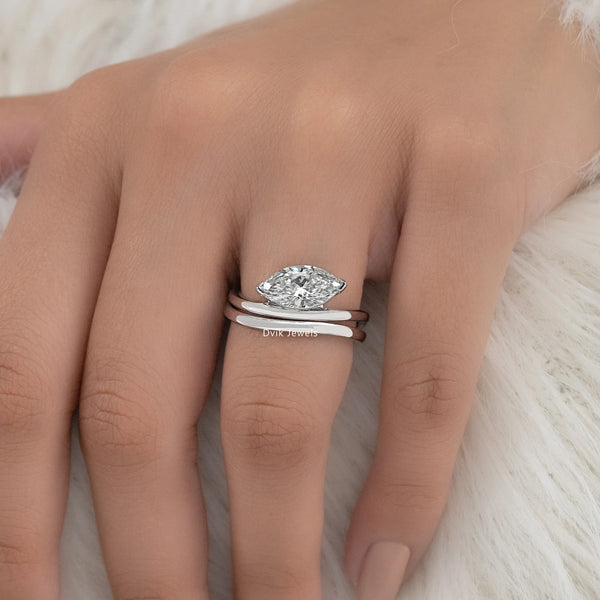
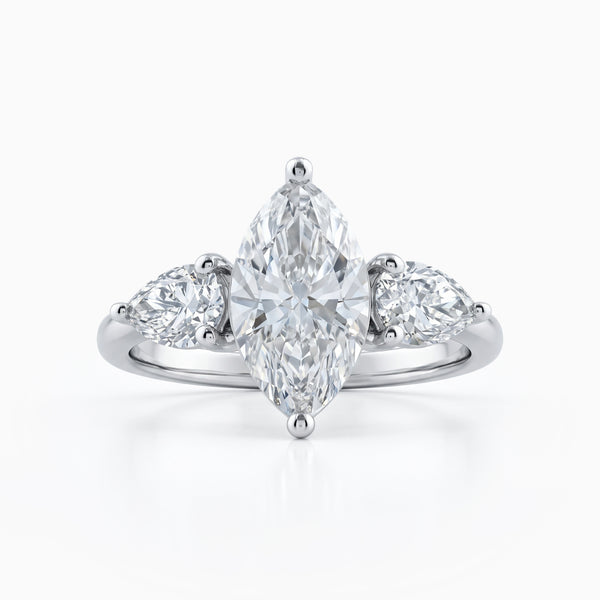
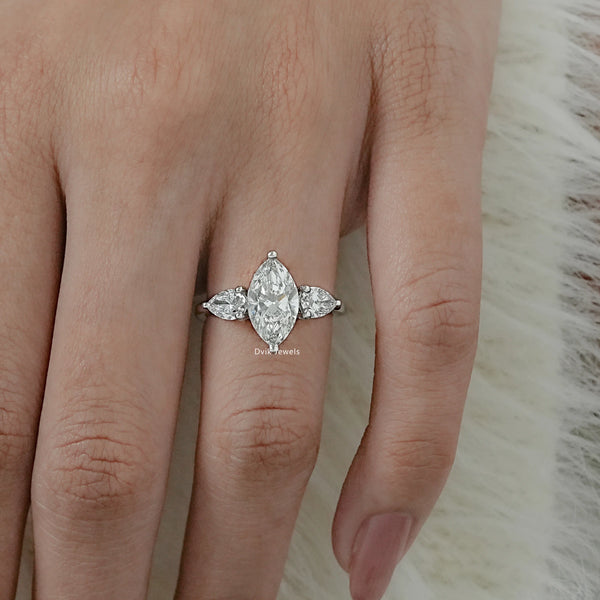
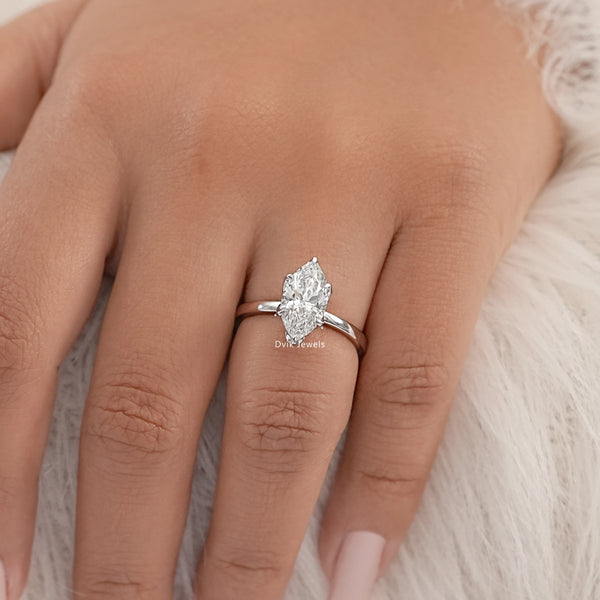
A marquise diamond engagement ring features an elongated center diamond with curved sides and two pointed ends. The shape can be set vertically in a traditional north-south position or horizontally in an east-west setting, depending on the ring design.
There is no single best setting, but the two pointed ends of a marquise diamond should be well protected. V-tip prongs can secure the tips while keeping more of the diamond visible, while bezel and half-bezel settings place additional metal around the edges for greater coverage.
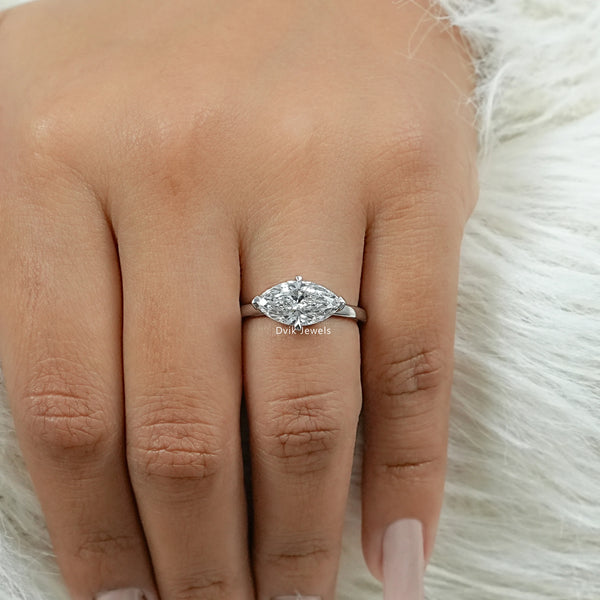
A north-south marquise engagement ring positions the diamond lengthwise along the finger, while an east-west setting turns the diamond horizontally across the finger. North-south settings emphasize the elongated outline, whereas east-west marquise rings create more side-to-side coverage.
A length-to-width ratio around 2:1 is a common reference point for a [marquise diamond](https://dvikjewels.com/collections/marquise-cut-diamond), but there is no single ideal proportion. A lower ratio creates a broader shape, while a higher ratio gives the diamond a longer, narrower outline. The final choice should also consider symmetry and how the diamond looks on the finger.
Marquise engagement rings can catch on clothing if the pointed tips or prongs are highly exposed. A secure V-tip, bezel, half-bezel, or lower-profile setting can reduce this issue. The setting should also be checked periodically to make sure the diamond remains secure.
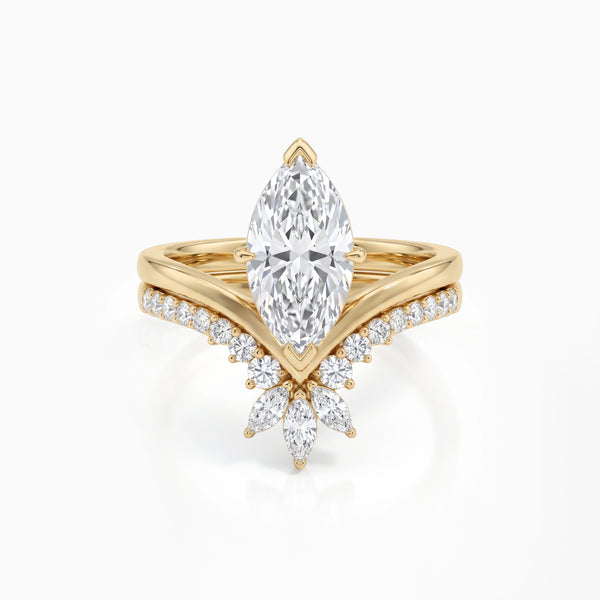
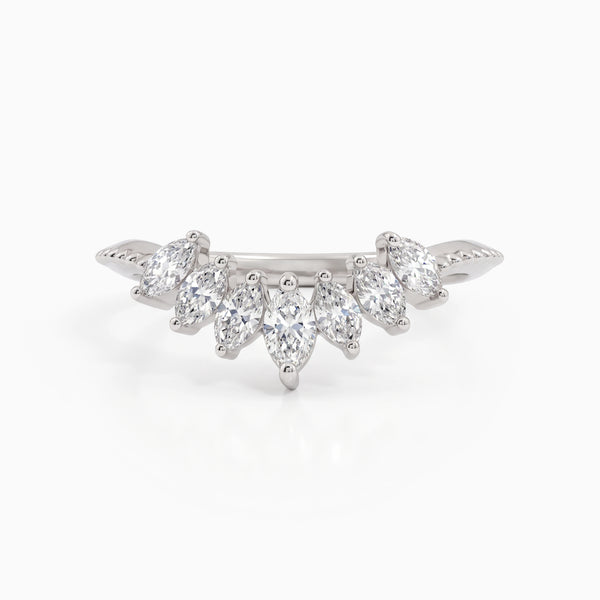
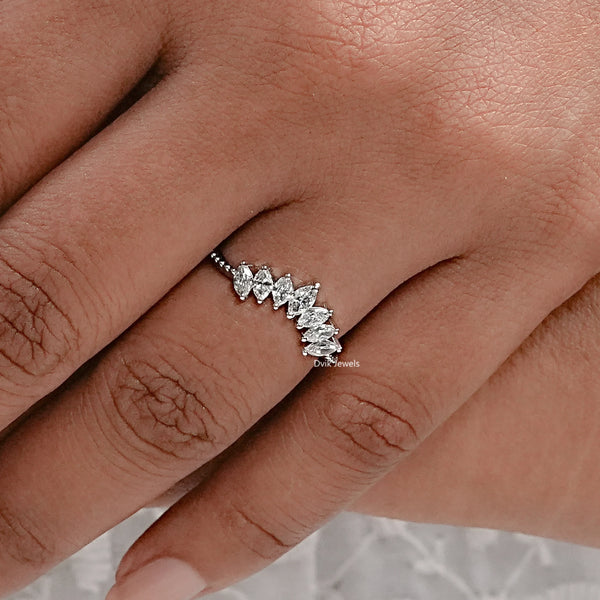
The right [wedding band](https://dvikjewels.com/collections/lab-grown-diamond-wedding-bands) depends mainly on the height and shape of the engagement ring setting. Curved, chevron, V-shaped, and open bands can follow the outline of a lower-set marquise ring, while some higher settings allow a straight wedding band to sit closer to the [engagement ring](https://dvikjewels.com/collections/lab-diamond-engagement-rings).