
Asscher Cut Engagement Rings








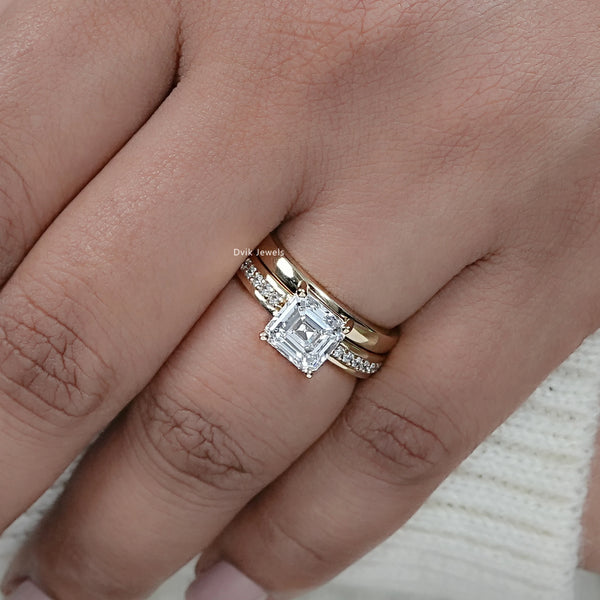


Shop Lab Grown Asscher Cut Engagement Rings
Collection FAQs
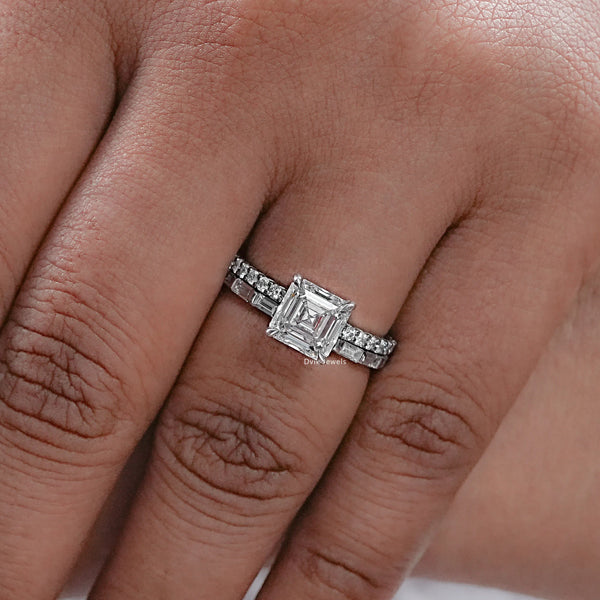
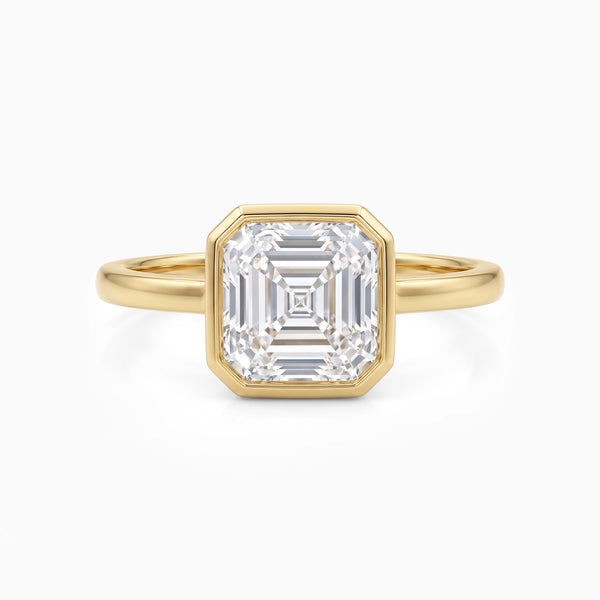
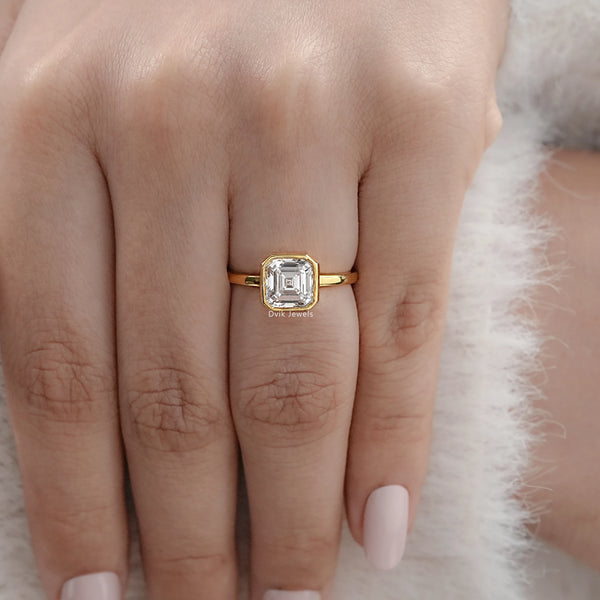
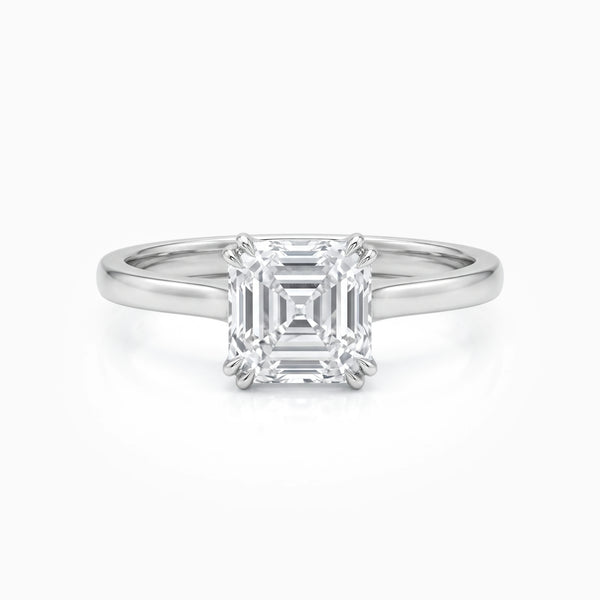
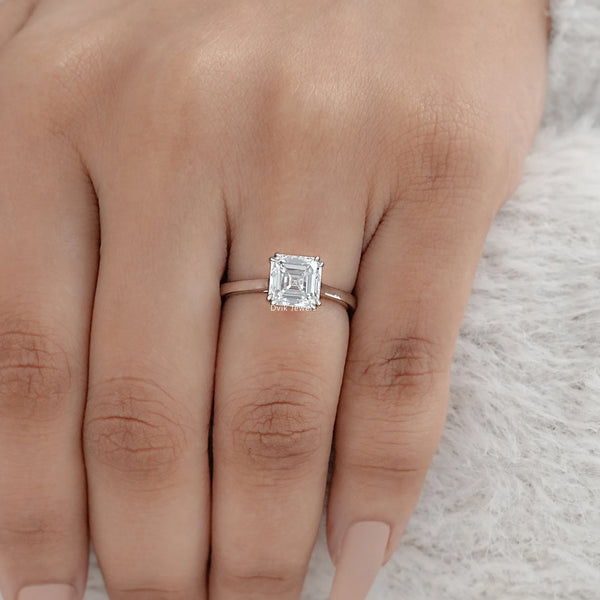
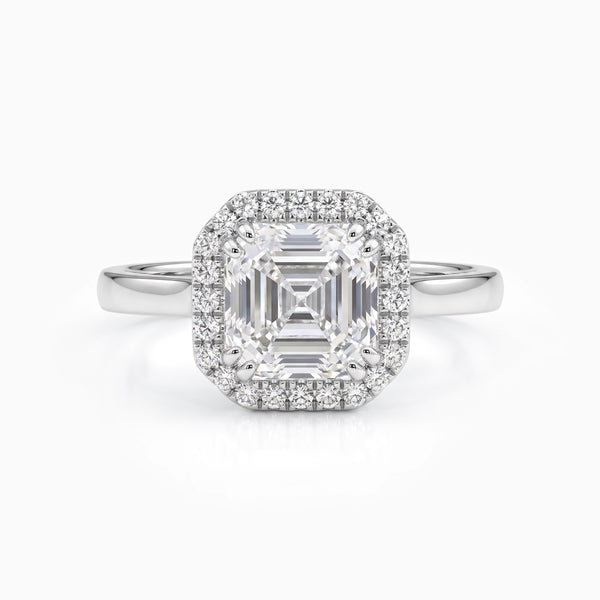
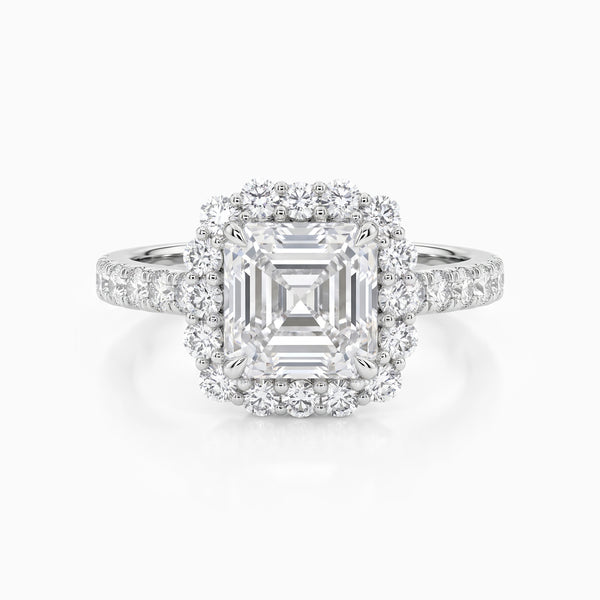
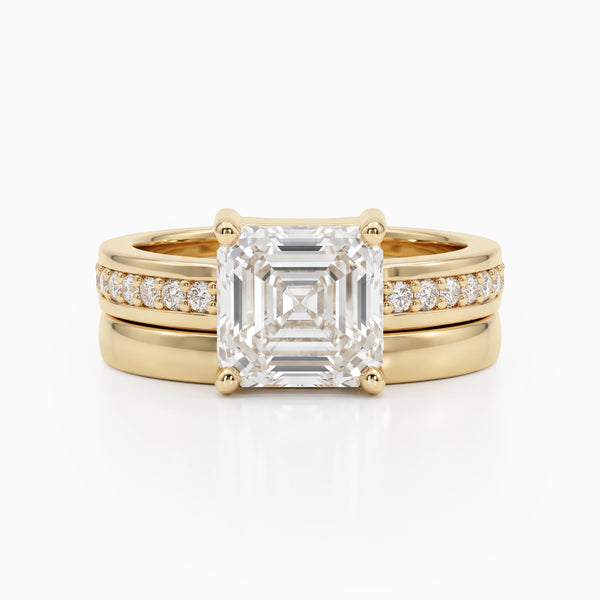
An Asscher cut engagement ring features a square step-cut center stone with cropped corners and broad, symmetrical facets. Its layered facet pattern creates a structured geometric look and noticeable depth through the center, making the shape suitable for solitaire, bezel, halo, and [multi stone ring](https://dvikjewels.com/collections/three-stone-engagement-ring) designs.
Both have a generally square outline, but their facet structures are different. An Asscher cut has cropped corners and step-cut facets that create a more structured pattern, while a [princess cut](https://dvikjewels.com/collections/princess-cut-diamond) usually has pointed corners and brilliant-style facets that reflect light in a more fragmented way.
It can. [Asscher cut diamonds](https://dvikjewels.com/collections/asscher-cut-diamond) often carry more of their weight through their depth, so they may show less face-up surface area than some elongated or shallower diamond shapes of the same carat weight. Comparing millimeter measurements along with carat weight gives a better idea of how large the diamond will appear in a ring.
Clarity deserves extra attention with an Asscher cut because its broad step facets can make inclusions easier to see through the center. An eye-clean appearance matters more than choosing a clarity grade alone, so compare the individual diamond, the location of any inclusions, and whether they are noticeable face-up.
Asscher cut diamonds reflect light differently from [brilliant cut diamonds](https://dvikjewels.com/collections/brilliant-cut-diamonds). Their broad step facets create larger, more defined flashes of light and a structured visual pattern, while brilliant cuts such as round or princess diamonds usually produce smaller and more frequent light reflections.
There is no single setting that is best for every Asscher cut engagement ring. Solitaire settings keep the center diamond prominent, while bezel settings surround more of its outline. Halo, side-stone, and [five-stone designs](https://dvikjewels.com/collections/5-stone-diamond-rings) can add additional diamond coverage across the finger. The right choice depends on the appearance and ring profile you prefer.
Yes. Asscher cut engagement rings can be worn every day when the center diamond is properly secured in a well-constructed setting. Because Asscher cuts have cropped rather than sharp pointed corners, they do not have the same exposed pointed-corner profile as a princess cut. The prongs or bezel should still be checked periodically to help keep the stone secure.
The right [wedding band](https://dvikjewels.com/collections/lab-grown-diamond-wedding-bands) depends on the [engagement ring's](https://dvikjewels.com/collections/lab-diamond-engagement-rings) setting height and shape. A straight band may sit flush beside a higher-set Asscher engagement ring, while a curved or contoured wedding band can fit more closely around a lower or wider center setting. Plain bands, baguette bands, and step-cut diamond bands can also pair well with the structured outline of an Asscher cut.