
Heart Shaped Diamond Engagement Rings


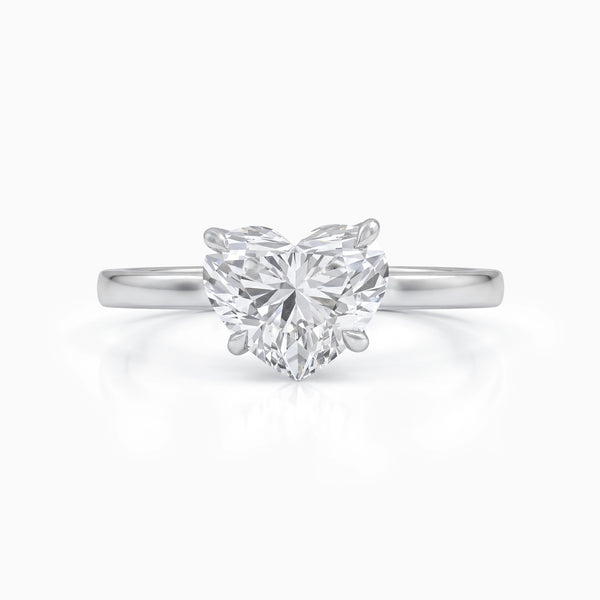
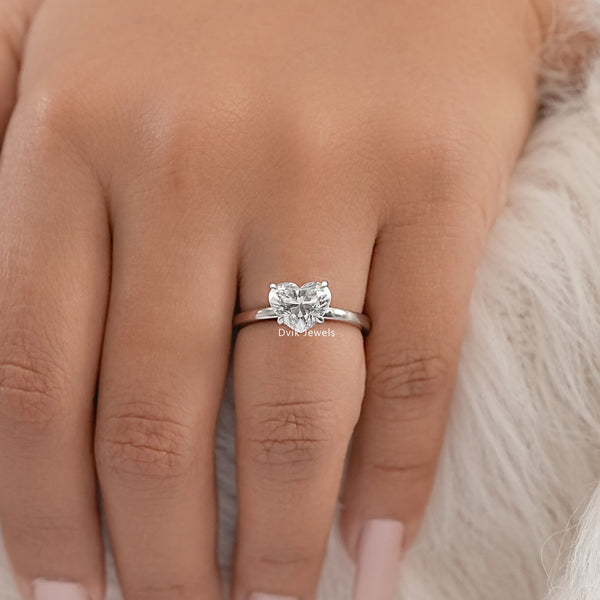
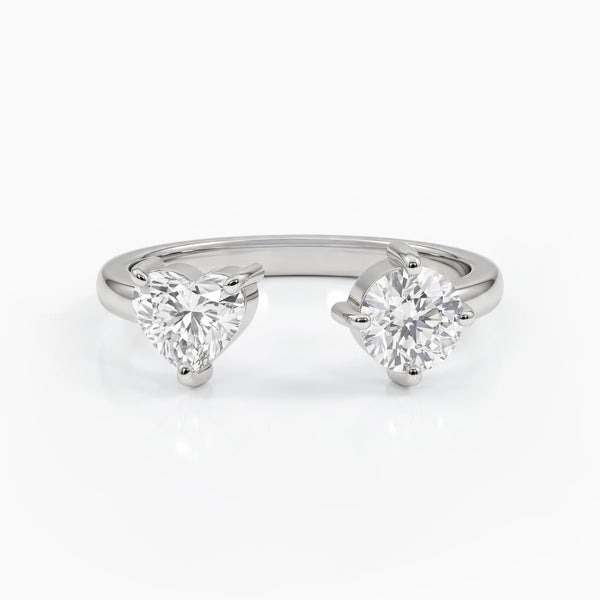
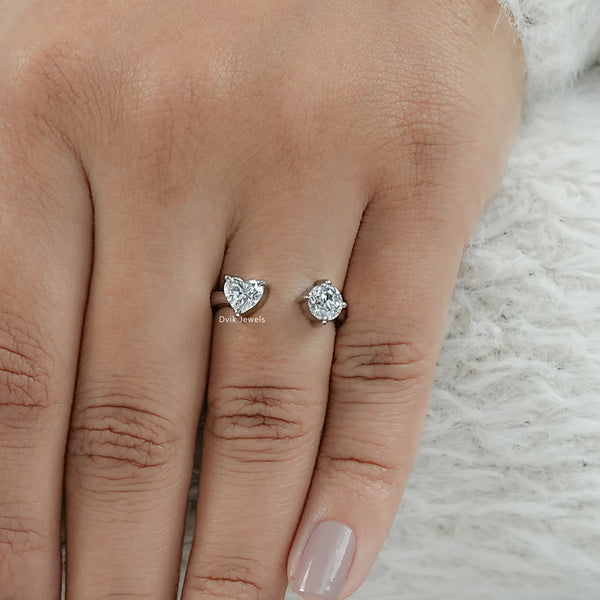
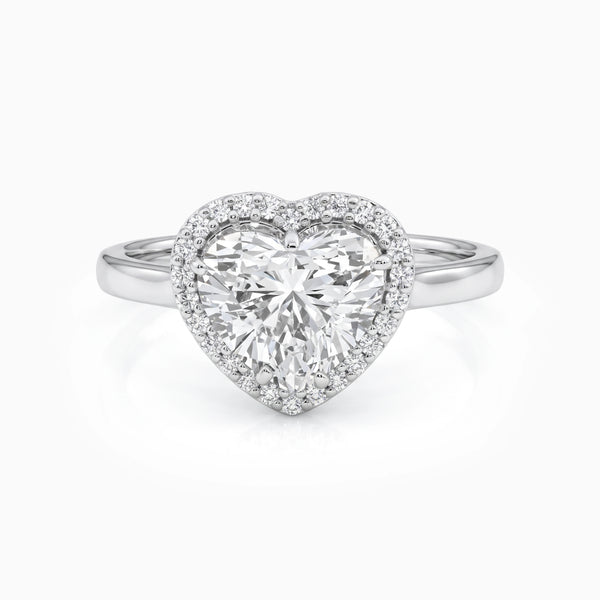
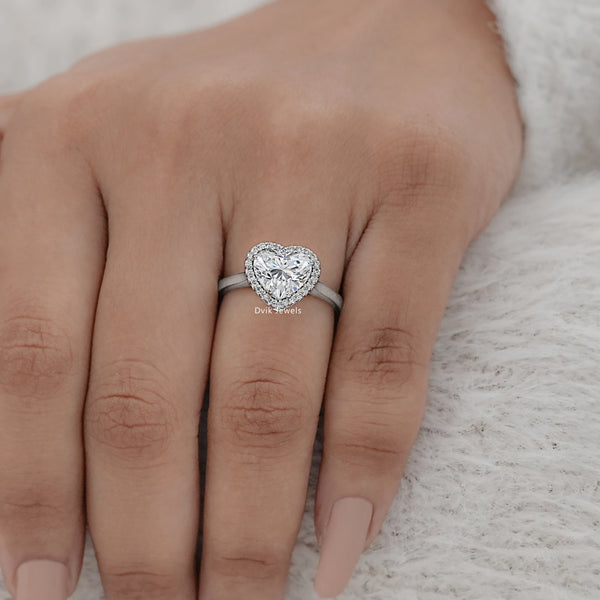
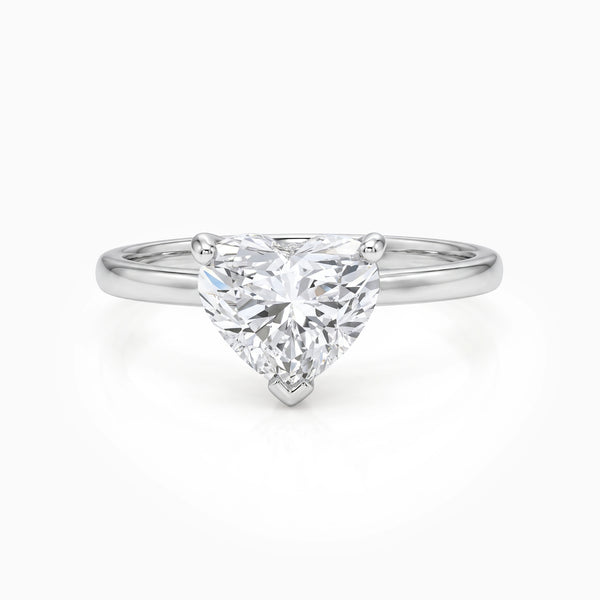
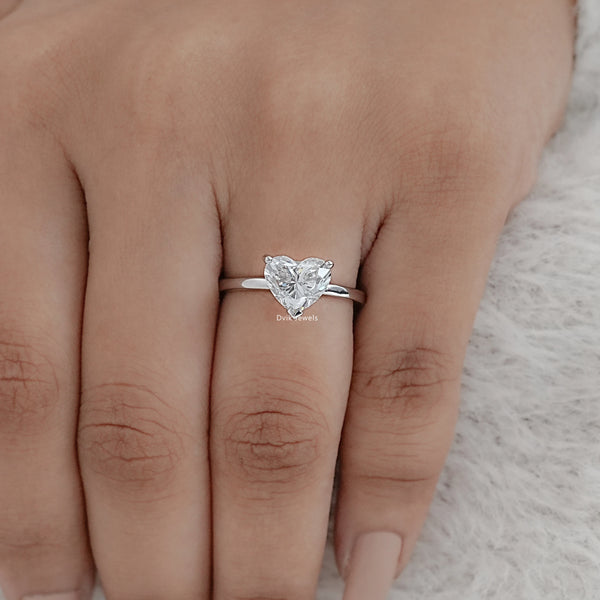


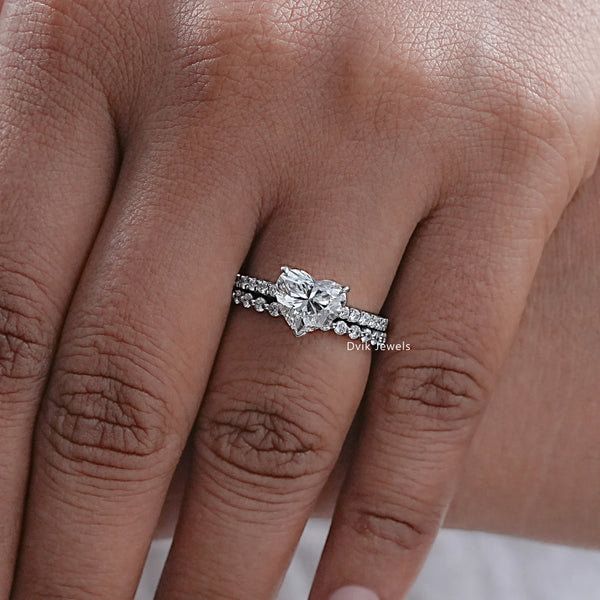
Shop Heart Shaped Lab Grown Diamond Engagement Rings
Collection FAQs
A [heart shaped diamond](https://dvikjewels.com/collections/heart-shape-diamond) with a length-to-width ratio close to 1.00 often creates a balanced and recognizable heart outline. Slightly wider or more elongated proportions can also look attractive, so compare the actual measurements, symmetry, and overall outline rather than choosing by ratio alone.
Look at the diamond from the top and compare both sides of the heart. The lobes should appear balanced, the cleft should sit near the center, and the bottom point should align with the middle of the stone. Good symmetry helps the heart outline look more even and defined in the ring.
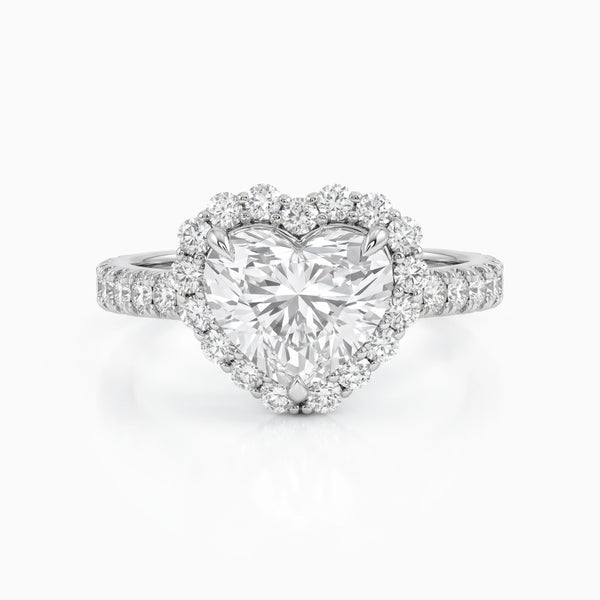
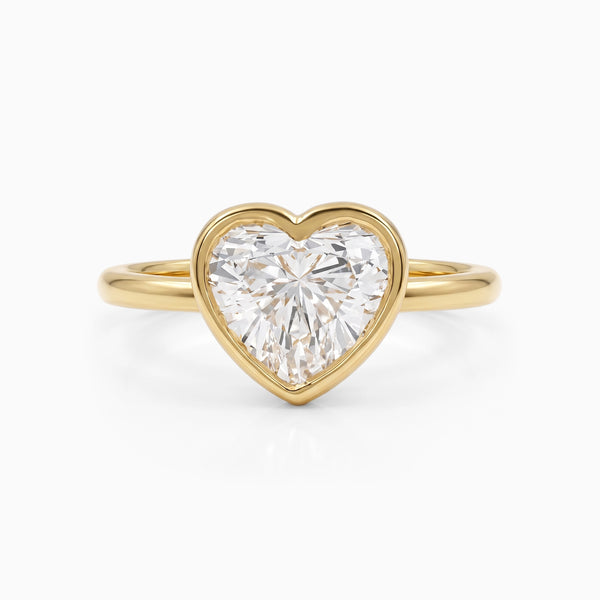
Solitaire, halo, and accent settings can all work well with heart shaped diamonds. The setting should securely support the diamond and protect its pointed tip, which can be more exposed than the rounded sides. The right choice depends on whether you prefer a clean, minimal look or a more detailed design.
It can, depending on how the diamond is set. A heart shaped diamond with proper protection around the pointed tip is less likely to catch on clothing than one with a more exposed point. The height and profile of the setting can also affect everyday comfort.
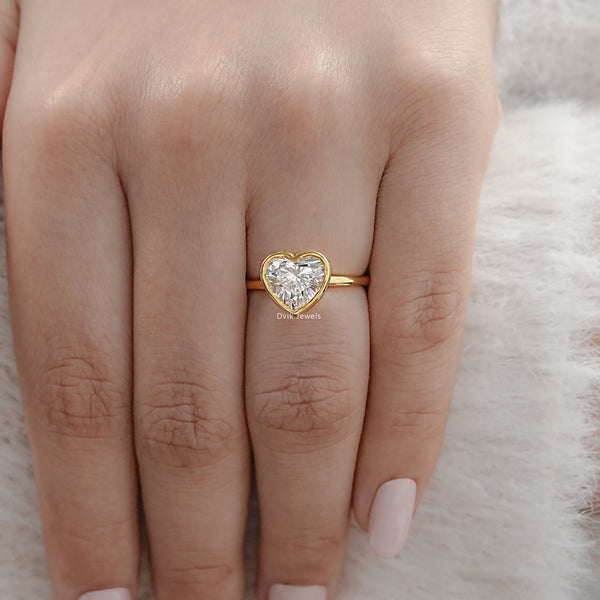
Heart shaped diamonds can have a broad face-up appearance, but their visible size depends on the diamond's proportions, depth, and measurements. When comparing engagement rings, look at the millimeter dimensions along with carat weight because diamonds with the same carat weight can appear different in size.
Yes, heart shaped diamond engagement rings can be suitable for everyday wear when the center stone is securely set and the ring profile suits your routine. If you use your hands frequently, consider a setting that protects the pointed tip and does not position the diamond excessively high.
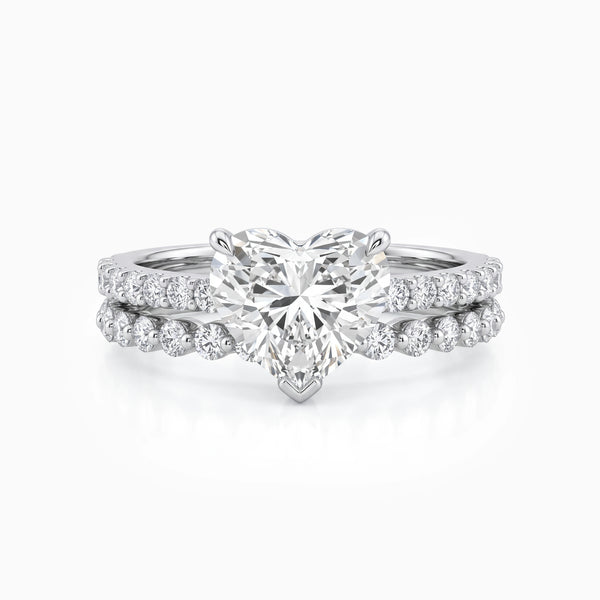
The [best wedding band](https://dvikjewels.com/collections/lab-grown-diamond-wedding-bands) depends on the engagement ring's setting and basket profile. A straight wedding band may sit well when there is enough clearance below the center setting, while a curved or contoured band can fit more closely around a lower-set heart shaped diamond.
Choose a solitaire if you want the heart shaped center diamond to remain the main focus with a cleaner appearance. A halo surrounds the center stone with smaller diamonds, creating a more detailed look and making the center appear more prominent. The better option depends on how much surrounding detail and sparkle you prefer.