
Three Stone Rings


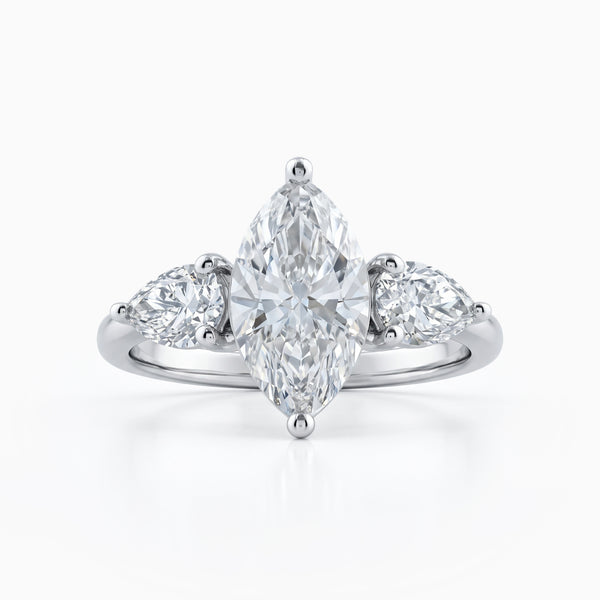
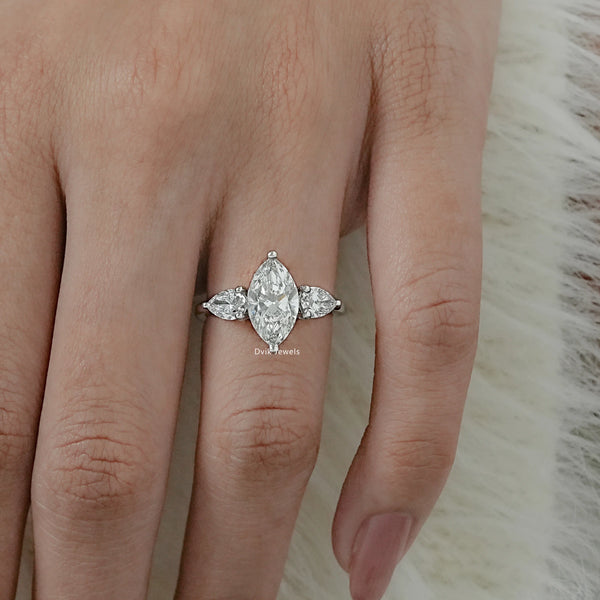
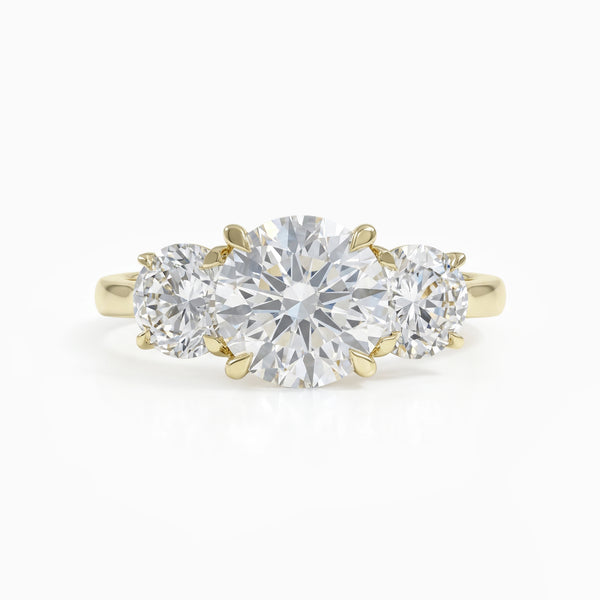
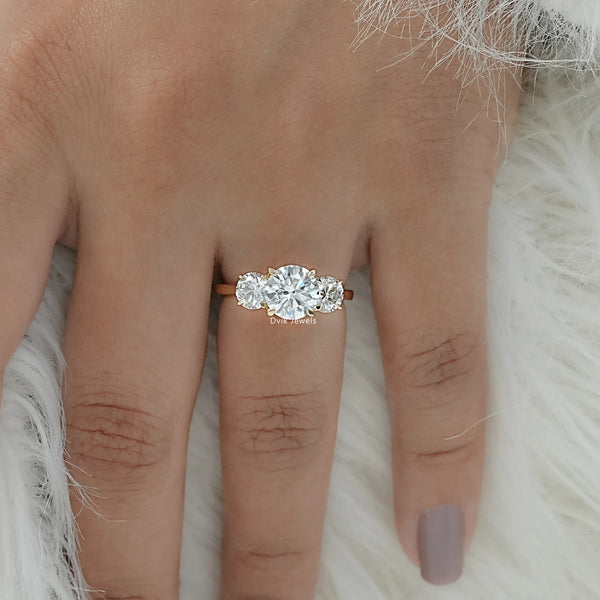
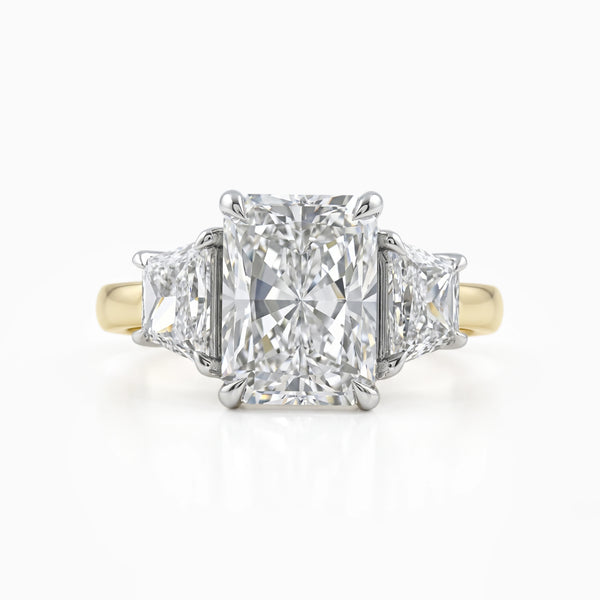
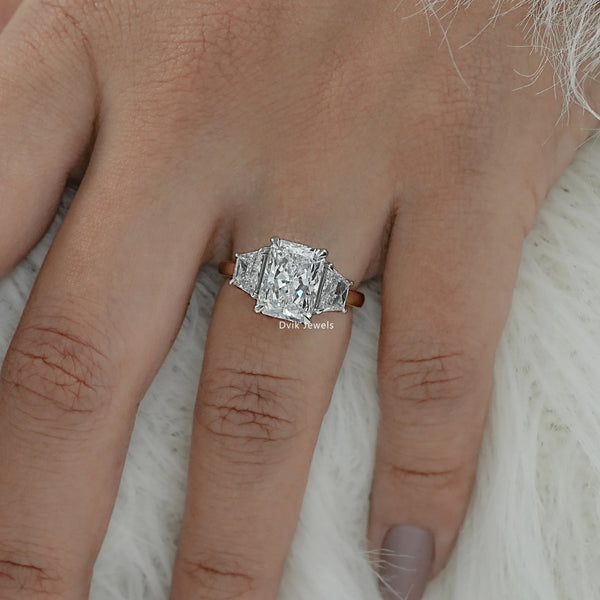


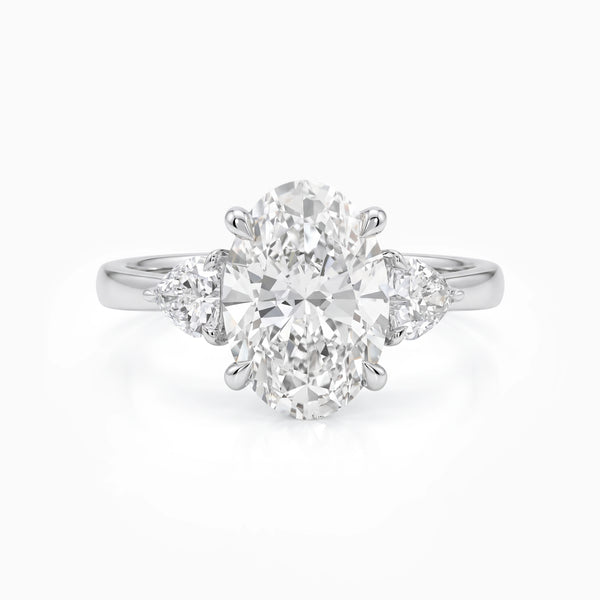
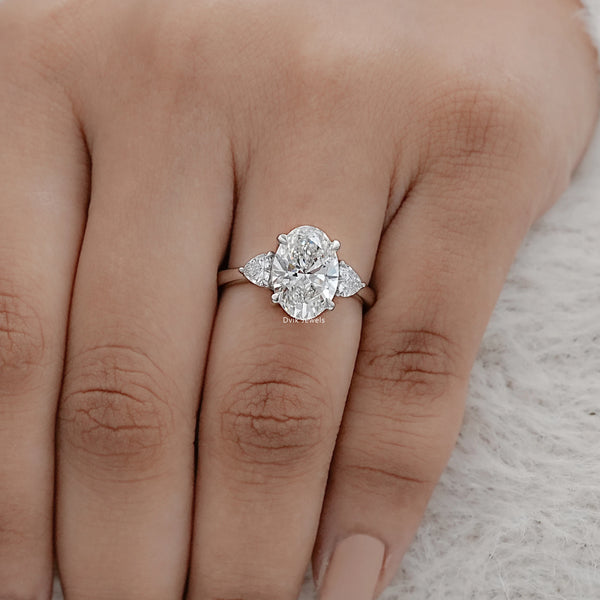

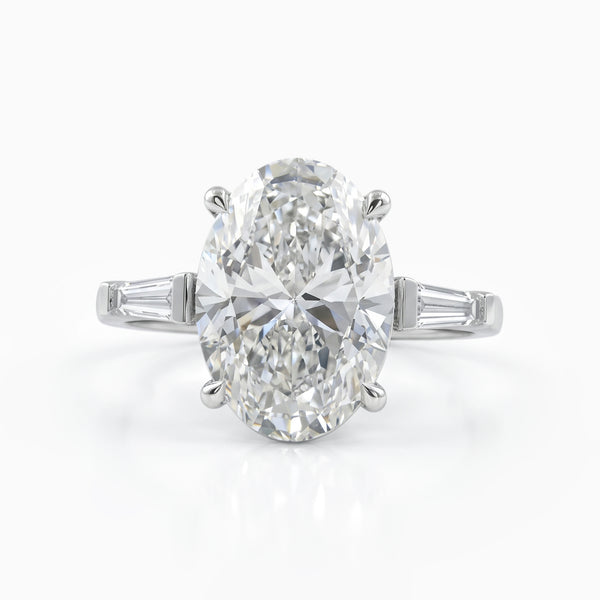
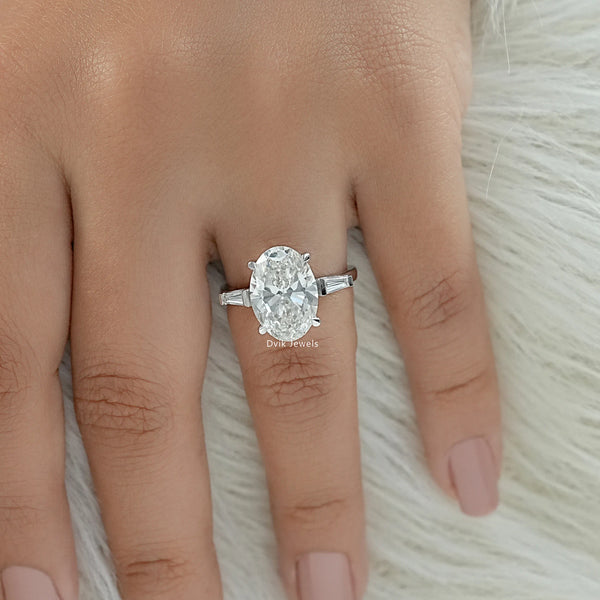


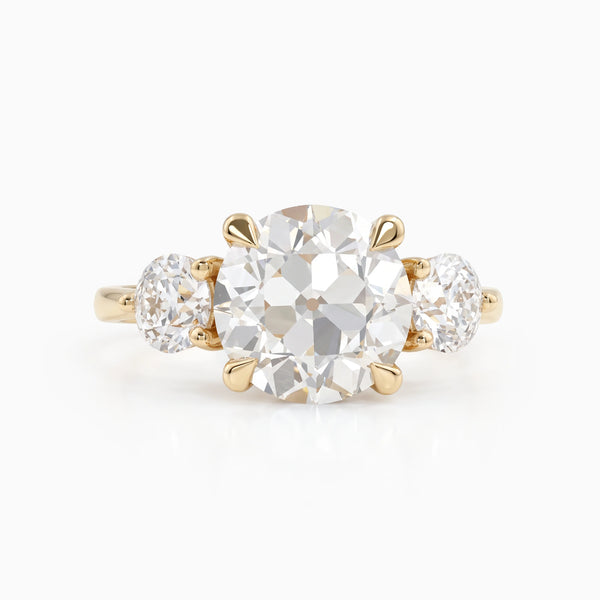
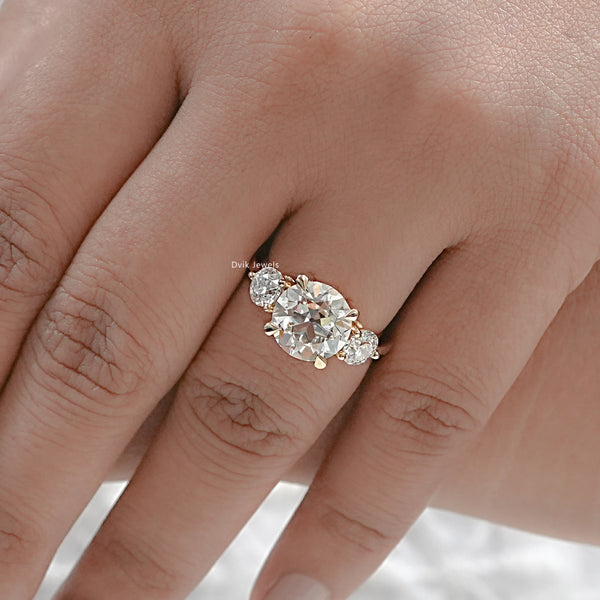



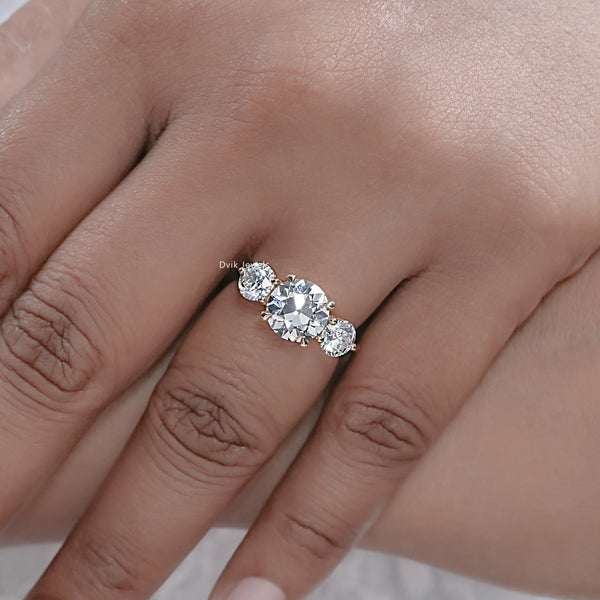
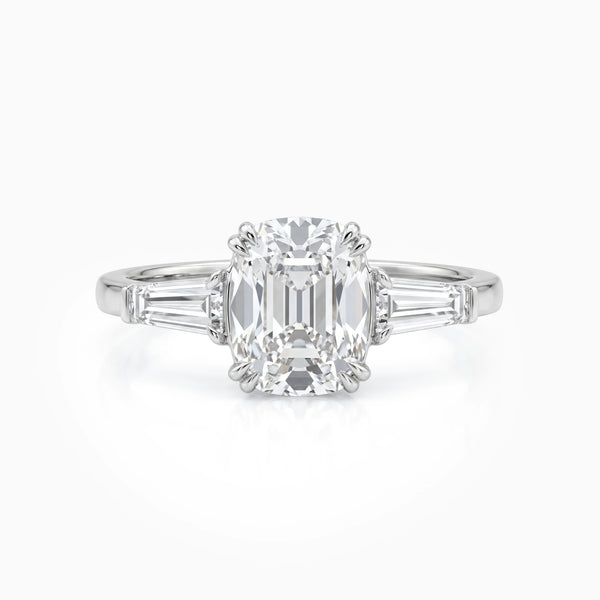
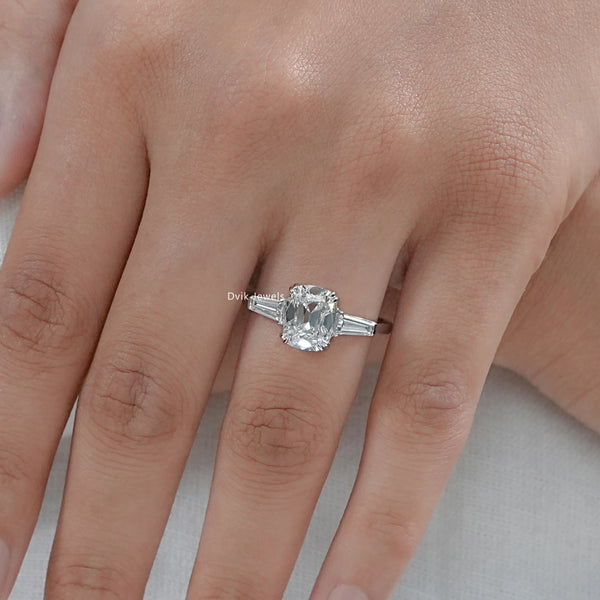
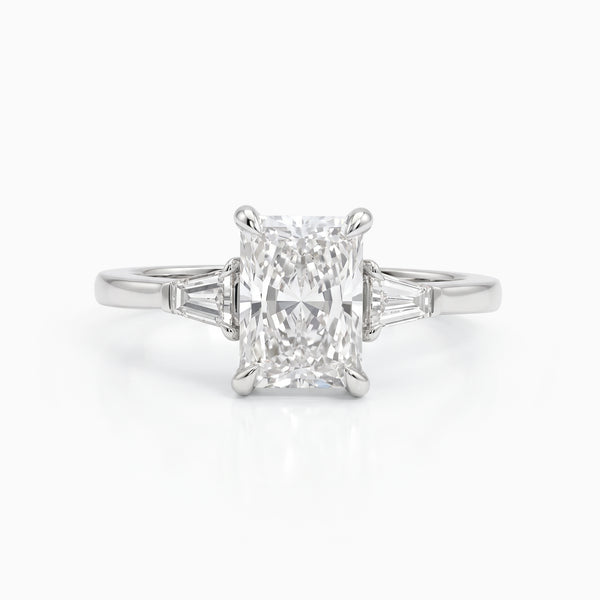
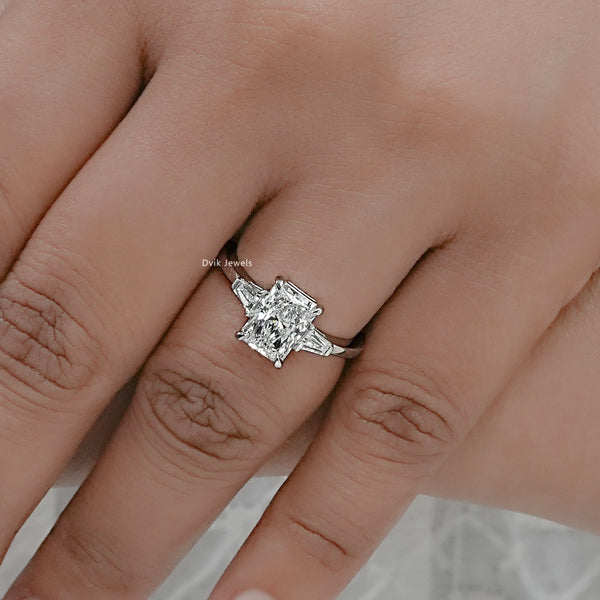


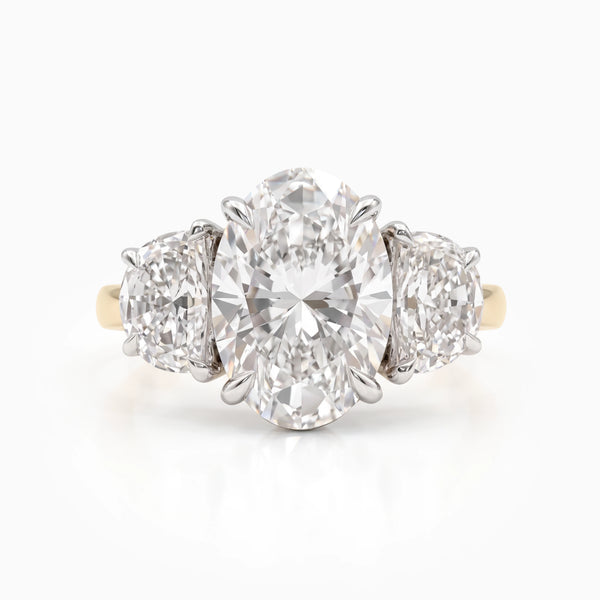
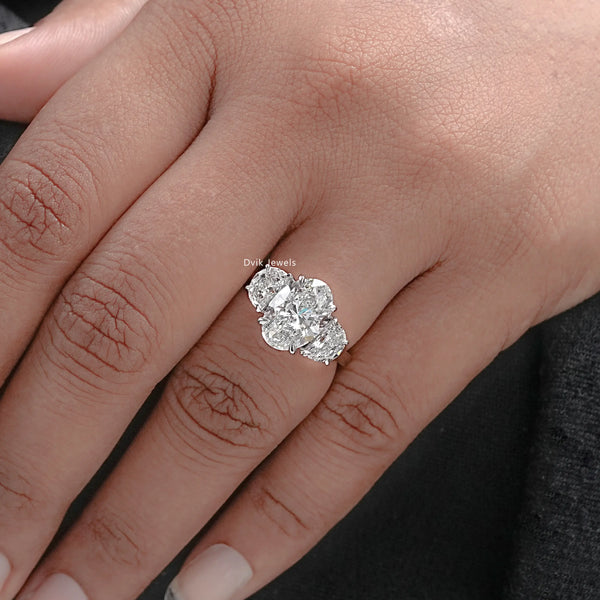
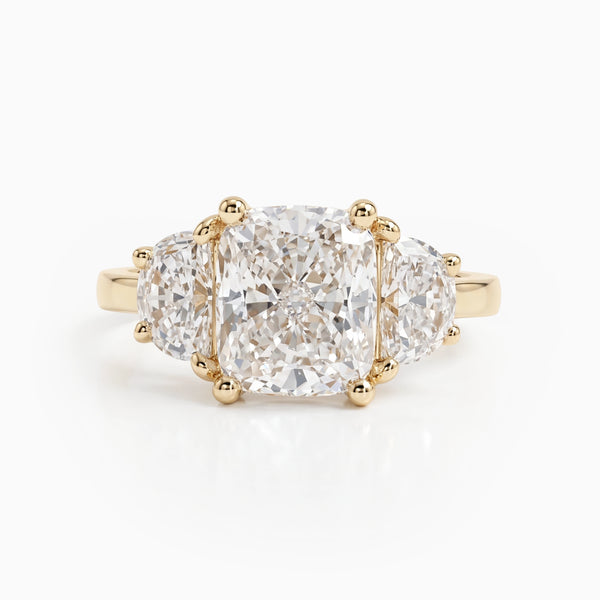
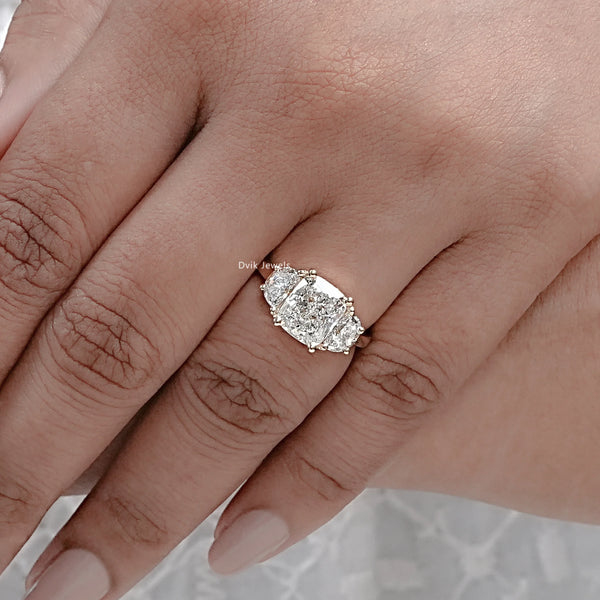
Three Stone Engagement Rings
Collection FAQs
Three stone engagement rings can cost more than comparable solitaire rings because they feature two additional diamonds and may require more detailed setting work. However, pricing depends on total diamond weight, stone quality, design complexity, and metal selection. A three stone ring with smaller lab grown diamonds may cost less than a solitaire featuring one larger, higher-grade diamond. Compare the complete ring specifications, including center and side stone details, rather than assuming that more diamonds always mean a higher price.
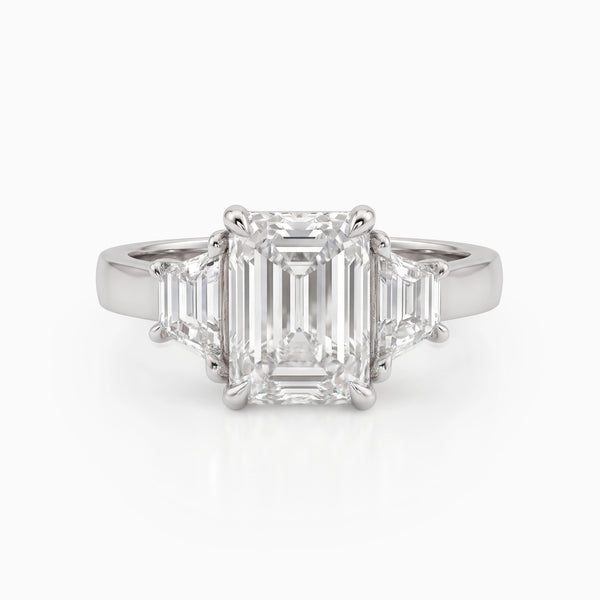
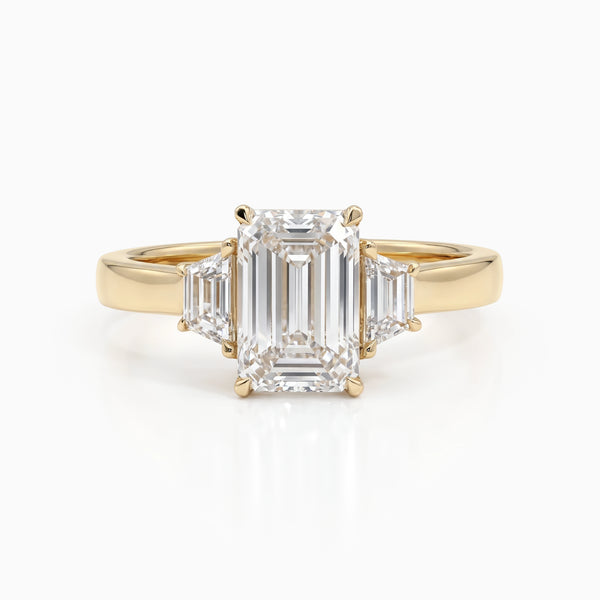
Choose side stones based on their shape, dimensions, and how they complement the center diamond. Tapered baguette and trapezoid diamonds create a structured appearance, particularly with emerald or radiant center cuts. Pear shaped and half-moon side stones produce different outlines, while kite and trillion diamonds offer more angular arrangements. Consider the length, width, and positioning of each side stone, as wider combinations increase finger coverage. Comparing face-up measurements helps you choose proportions that suit your preferred ring design.
Three stone engagement rings often provide greater finger coverage than solitaire rings because the additional diamonds extend the design horizontally. However, this does not mean the center diamond appears larger. A solitaire with a higher-carat center stone may still have a more prominent individual diamond. The overall appearance depends on the combined width, diamond dimensions, and spacing between the stones. Compare face-up measurements rather than carat weight alone when evaluating the visual size of different engagement ring styles.
The ideal side stone size depends on the center diamond's dimensions and how much emphasis you want to place on it. For example, a 2 carat center diamond paired with two 0.50-carat side diamonds (each) creates different proportions from the same center paired with two 1-carat side diamonds (each). These are illustrative combinations, not fixed sizing recommendations. Smaller side stones generally emphasize the center diamond, while larger ones increase overall finger coverage. Compare millimeter measurements, diamond shapes, and stone placement before selecting a proportion.
Total carat weight (TCW) refers to the combined weight of all diamonds in a ring, not just the center stone. For example, a three stone diamond ring featuring a 1.00-carat center diamond and two 0.25-carat side diamonds has a total diamond weight of 1.50 carats. If the setting includes additional accent diamonds, their weight may also contribute to the stated total. Before comparing rings, confirm whether the advertised carat weight represents the center diamond alone or all diamonds in the design.
A three stone engagement ring can sit flush with a wedding band if its setting provides sufficient clearance for the neighboring band. Low-set side diamonds, protruding prongs, or a wide ring head may create a visible gap with a straight wedding band. A curved, contoured, or appropriately designed open wedding band may provide a closer fit, depending on the setting. If a gap-free arrangement matters to you, review the engagement ring's side profile and confirm the dimensions of both rings before purchasing.
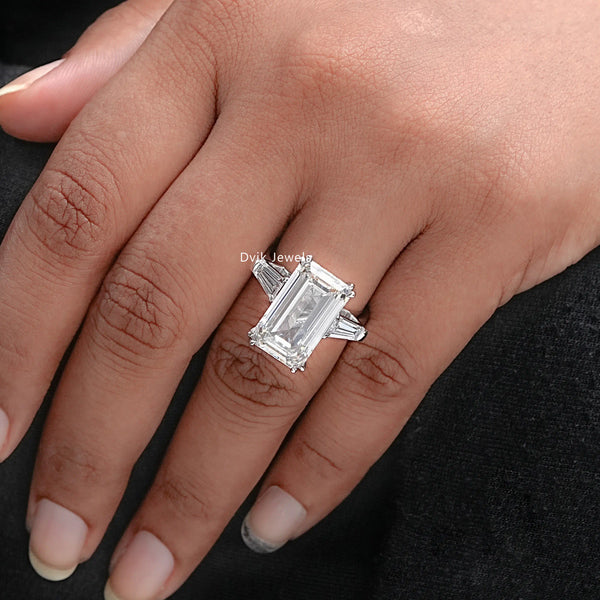
Three stone engagement rings can suit smaller hands when the combined diamond arrangement is proportionate to the finger. Narrower side diamonds and a slim band can help reduce the design's overall width, while an elongated center stone may create the appearance of additional finger length. Consider how far the outer diamonds extend across your finger and whether the setting feels comfortable between neighboring fingers. Comparing the total stone width with your finger measurements and reviewing on-hand photographs can help you choose a suitable design.
Before buying a three stone lab grown diamond ring online, check the center diamond's carat weight, dimensions, cut, color, clarity, and available grading report. Review the side-stone specifications separately, as the center diamond's grading report may not cover every diamond in the setting. Examine product images from multiple angles to assess stone proportions, prong placement, and setting height. When shopping at Dvik Jewels, review the specifications of your selected design and confirm its applicable certification, metal options, resizing eligibility, shipping terms, and return conditions before ordering.