











October 16, 2026
Engagement Ring vs Wedding Band: Key Differences Explained
Parth Khunt
Summarize this post with AI
An engagement ring and a wedding band mark two different stages of a relationship, so they aren't simply two versions of the same ring. An engagement ring typically features a prominent center stone, while a wedding band is usually a simpler band designed to symbolize the marriage itself.
But do you need both? And how do you wear them together? Understanding the wedding band vs engagement ring difference can help you choose the right rings, plan your budget, and create a combination that works for everyday wear.
What Is an Engagement Ring?
An engagement ring is a ring traditionally given when a couple gets engaged, usually featuring a prominent center diamond or gemstone. Unlike a wedding band, which is generally designed as a continuous band, an engagement ring is typically built around a central stone that serves as its main focal point.
Engagement rings come in many designs, including solitaire, three-stone, halo, and bezel settings. The choice of diamond shape, setting, metal, and ring profile can change both the appearance and wearability of the ring. For example, a raised prong setting can showcase a diamond from multiple angles, while a bezel setting surrounds the stone with metal for a more protected design.
The center stone doesn't have to be large, either. Some couples choose a substantial diamond, while others prefer a smaller center stone or a design with several diamonds. What makes it an engagement ring is primarily its role in marking an engagement and its design around a focal stone, rather than a specific diamond size or setting.
Looking for an engagement ring? Explore our lab grown diamond designs in different shapes and settings.
Shop Engagement Ring
Why Are Engagement Rings More Fancy Than Wedding Rings?
Engagement rings are often perceived as more elaborate because their designs tend to place greater emphasis on a center stone. A larger diamond, halo of accent stones, intricate setting, or detailed band can give the ring a more prominent appearance.
Wedding bands, on the other hand, are commonly designed for comfortable, everyday wear and may have a simpler profile. However, this isn't a rule. Diamond bands, eternity bands, and other detailed designs can be just as intricate. The difference comes down to design purpose, not importance.
What Is a Wedding Band?
A wedding band is a ring traditionally exchanged during the wedding ceremony to represent the marriage. Unlike an engagement ring, it usually doesn't have one dominant center stone. Instead, the design often follows the shape of the band itself.
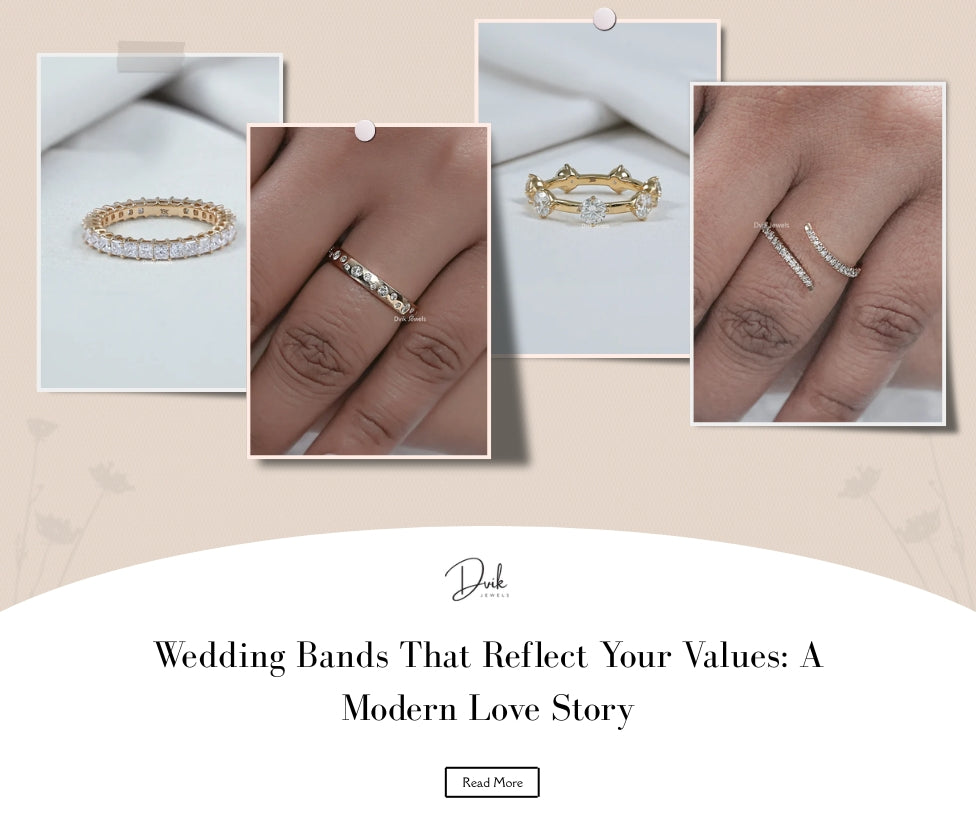
Wedding bands can be plain metal, diamond set, or a combination of both. Popular options include pavé, channel set ring, half eternity band and eternity bands. Metal choices can range from yellow, white, or rose gold to platinum, allowing couples to choose a band that suits their style and complements an existing engagement ring.
One advantage of a wedding band is its versatility. It can be worn alongside an engagement ring, but it doesn't have to be. Some people choose a wedding band as their only ring after marriage, particularly if they prefer a simpler piece for daily wear.
Looking for a wedding band? Explore diamond and metal bands designed for everyday wear and easy pairing.
Shop Wedding Band
Engagement Ring vs Wedding Band: What’s the Difference?
The main difference between an engagement ring and a wedding band is when they are traditionally given, what they symbolize, and how they are designed. An engagement ring usually has a prominent center diamond or gemstone, while a wedding band is typically a continuous band of metal, with or without diamonds. Both can be worn together or separately.

So, when comparing a wedding band vs engagement ring, the biggest distinction isn't simply their appearance. It's the role each ring plays and how its design is constructed around that purpose. A wedding band can be just as meaningful as an engagement ring, even though it usually has a different design approach.
Engagement Ring vs Wedding Band: Key Differences to Know
Knowing the basic definitions is helpful, but the difference between wedding ring and engagement ring becomes clearer when you look at how each one is chosen, designed, and worn.
1. Purpose and Meaning
Traditionally, an engagement ring represents a couple's commitment to marry and is often presented during a proposal. A wedding band is exchanged during the marriage ceremony and represents the commitment made through the wedding.
That doesn't mean one is more meaningful than the other. Which is more important, the engagement ring or the wedding band? There isn't a universal answer. For some couples, the engagement ring carries the significance of the proposal, while others place more importance on the wedding band because it is the ring they wear throughout their marriage.
2. Design and Center Stone
The most noticeable difference is usually the design. Engagement rings are commonly built around a center diamond or gemstone, with the setting determining how that stone sits on the finger.
Wedding bands generally have a more consistent design around the finger. They may be completely plain or engraved with smaller diamonds set across part or all of the band.
This is why an engagement ring and wedding band comparison can look so different visually. One typically draws attention to a central stone, while the other emphasizes the band itself.
3. Metal and Diamond Choices
Both rings can be made from the same metals, including yellow gold, white gold, rose gold, and platinum. The difference is more often found in how those materials and diamonds are used.
An engagement ring may use a substantial center diamond with smaller accent stones, while a wedding band can use several smaller diamonds distributed along the band. Diamond coverage, metal weight, setting style, and ring width can all affect the final price.
This also means you don't have to choose identical metals. A white gold engagement ring can be paired with a yellow gold wedding band if you prefer the contrast.
4. Profile and Wearability
Engagement rings can have a higher profile, particularly when the center diamond is held above the finger by prongs. This can make the diamond more visible but may also affect how comfortably another ring sits beside it.
Wedding bands are often lower in profile, which makes them practical for everyday wear. However, the actual comfort depends on the band's width, thickness, edges, setting, and how it fits alongside the engagement ring.
If you plan to wear a wedding band and engagement ring together every day, these physical details matter just as much as their appearance.
5. Cost
Engagement rings are often more expensive than wedding bands, but that's not an automatic rule. The biggest price driver is usually the center diamond, particularly its carat weight and quality.
Why are engagement rings more expensive than wedding bands?
Basically, an engagement ring may require one larger center stone, a more complex setting, and additional accent diamonds. A wedding band can use less metal and smaller stones, although an elaborate eternity band or platinum diamond band can also have a substantial price.
So, instead of assuming one ring should cost more, compare the diamond specifications, metal, craftsmanship, and overall design of each piece.
Can You Wear an Engagement Ring and Wedding Band Together?
Yes. Wearing an engagement ring and wedding band together is one of the most common ways to wear both after getting married. The two rings can be designed as a matching set or chosen separately, as long as their profiles and proportions work well together.
How Do You Wear an Engagement Ring and Wedding Band Together?
Traditionally, the wedding band is worn closer to the hand, with the engagement ring placed above it. The idea is that the wedding band sits closest to the heart.
That said, there is no requirement to follow this order. Some people wear their engagement ring first and wedding band above it, while others switch the arrangement for comfort or personal preference.
When wearing both rings, pay attention to how they sit against each other. A high set engagement ring may leave enough space for a straight wedding band, while a low set design may work better with a curved or contoured band.
What Goes on First: Engagement Ring or Wedding Band?
If you're following the traditional arrangement, the wedding band goes on first, followed by the engagement ring. This places the wedding band closest to the base of the finger.
However, ring order isn't a strict rule. If another arrangement feels more comfortable or works better with the shape of your rings, you can wear them differently.
How to Choose a Wedding Band That Fits Your Engagement Ring

Choosing a wedding band isn't only about finding a design you like. The two rings need to physically work together, especially if you plan to wear them stacked every day.
Match the Ring Profile
Start by looking at the shape and height of your engagement ring. A straight wedding band can sit neatly beside some engagement rings, while a curved or contoured band may be necessary when the center stone or setting extends lower toward the finger.
Before buying, check whether the two rings can sit together without pressing against each other.
Consider the Setting Height
The setting of your engagement ring can determine which wedding bands will fit properly. A raised solitaire may accommodate a straight band, while a low set or bezel set engagement ring may require a band designed around its profile.
This is one reason it's useful to try the rings together rather than choosing a wedding band based only on how it looks by itself.
Coordinate the Metals
Your engagement ring and wedding band don't have to use the same metal. Matching metals create a more uniform appearance, while combinations such as white and yellow gold can add contrast.
If you prefer different metals, consider whether the colors and finishes complement each other. You should also think about how often the rings will rub against each other, as different metals can wear at different rates.
Balance Diamond Coverage
You can pair a diamond engagement ring with either a plain or diamond wedding band. The choice depends on how much detail you want across the entire stack.
For example, a diamond heavy engagement ring may look balanced with a simple band, while a plain solitaire gives you more freedom to add diamonds through the wedding band.
The goal isn't to make every part identical. It's to create a combination where the center stone, band width, and diamond coverage feel proportionate.
Think About Daily Comfort
A beautiful combination isn't practical if the rings constantly pinch, catch on clothing, or feel bulky. Consider the band's width, thickness, edges, stone settings, and how the rings move when you bend your finger.
If you use your hands frequently for work or other activities, a lower profile combination may be more comfortable for everyday wear.
Do Your Engagement Ring and Wedding Band Have to Match?
No. Your engagement ring and wedding band don't need to be identical in metal, diamond style, or design. What matters more is how well they work together in terms of proportion, profile, and overall appearance.
A matching set is one option, but mixing different designs can give you more flexibility. You might pair a detailed engagement ring with a plain metal band, or combine a solitaire with a diamond studded wedding band.
If you're looking for matching engagement ring and wedding band sets, consider whether the rings were designed to sit together. Coordinated sets can simplify the selection process, while choosing each ring separately gives you more room to personalize the combination.
Can a Wedding Band Be Worn Without an Engagement Ring?
Yes. A wedding band can be worn on its own, and many people choose this option for simplicity, comfort, or personal preference. There is no rule that says you must wear an engagement ring after getting married.
This also answers a common question: Can I wear my engagement ring instead of my wedding ring? Yes, you can. If you prefer your engagement ring or find it more comfortable for daily wear, there is no requirement to add a separate wedding band.
Is Your Engagement Ring Your Actual Wedding Ring?
Not necessarily. An engagement ring and wedding ring traditionally serve different purposes, but the terms can become confusing because people sometimes use "wedding ring" as a general term for any ring worn after marriage.
If you choose to wear only your engagement ring after the wedding, it can function as your everyday wedding ring from a practical standpoint. Likewise, some couples skip engagement rings and exchange wedding bands only.
Engagement Ring or Wedding Band: Which One Should You Buy First?
If you are planning a proposal, the engagement ring usually comes first because it is traditionally presented when the couple gets engaged. The wedding band can then be selected later based on the engagement ring's design, profile, metal and fit.
However, buying the rings separately isn't your only option. If you already know you want to wear both together, choosing them at the same time can make it easier to coordinate their proportions and ensure they sit comfortably.
How Many Rings Do You Need to Get Married?
There is no fixed number of rings required to get married. Some couples exchange one wedding band each, while others choose an engagement ring plus a wedding band. The decision depends on personal preference, cultural traditions, budget, and how you want to wear your rings.
If you prefer a two ring combination, choosing an engagement ring first gives you a starting point for selecting a complementary wedding band.
Should You Buy the Engagement Ring and Wedding Band as a Set?
Buying an engagement ring and wedding band as a set can make the selection process easier because the two rings are designed to work together. Their widths, profiles, metals, and diamond details are generally planned as a combination.
A set can be particularly useful if you want the rings to sit flush without spending time searching for a compatible band.
However, buying them separately gives you more flexibility. You can choose an engagement ring based on the center diamond and setting you prefer, then find a wedding band that suits your lifestyle and budget.
Can You Customize an Engagement Ring and Wedding Band Set?
Yes, customization can allow you to adjust details such as metal type, diamond shape, stone size, band width, and setting style, depending on what the jeweler offers.
If you're considering a custom engagement ring, focus first on how the two rings will physically fit together. A visually appealing combination isn't necessarily a practical one if the profiles interfere with each other.
For shoppers considering engagement ring and wedding band sets, customization can also be useful when you want a coordinated look without choosing two completely identical rings.
FAQs
1. Is an engagement ring and a wedding ring the same?
No. An engagement ring is traditionally given when a couple becomes engaged and usually features a prominent center stone. A wedding band is exchanged during the wedding ceremony and is generally designed as a band, either plain or decorated with diamonds. However, some people choose to use only one ring after marriage.
2. Can I wear my engagement ring instead of my wedding ring?
Yes. You can wear your engagement ring on its own after getting married if you prefer it. A separate wedding band isn't mandatory, and some people find an engagement ring more suitable for their personal style or daily routine.
3. What goes on first, an engagement ring or wedding band?
Traditionally, the wedding band goes on first, closest to the base of the finger, followed by the engagement ring. This is a convention rather than a requirement. You can reverse the order if it fits better or feels more comfortable.
4. How do you wear a wedding band and engagement ring?
The most common arrangement is to wear the wedding band first and the engagement ring above it. However, the best arrangement depends on how the two rings fit together. A straight band may work with a raised engagement ring, while a curved band can be better suited to a lower setting.
5. Is your engagement ring your wedding ring?
Not traditionally. An engagement ring and wedding ring have different roles, with the engagement ring marking the engagement and the wedding band representing the marriage. But if you choose to wear only your engagement ring after getting married, it can serve as your only everyday ring.
6. Do you need both an engagement ring and a wedding band?
No. Some couples choose both, while others exchange wedding bands only or continue wearing an engagement ring without adding another ring. There is no universal requirement for how many rings a married person should wear.
7. Why are engagement rings more expensive than wedding bands?
Engagement rings often cost more because they commonly feature a larger center diamond, which can account for a significant portion of the ring's price. However, this isn't always the case. A platinum or diamond wedding band can cost more than a classic engagement ring.
8. Can you mix metals between an engagement ring and wedding band?
Yes. You can pair different metals, such as a white gold engagement ring with a yellow gold wedding band. Mixing metals can create contrast while allowing you to choose each ring based on your preferred design and durability.
9. Should your wedding band match your engagement ring?
No. Matching isn't required. Your rings can use different metals, diamond patterns, or designs as long as they work well together in terms of size, profile, and proportions. Matching sets are convenient, but choosing the rings separately gives you more flexibility.